

Table of Contents
- Understanding Wagyu Beef: What Makes It Different
- Choosing Your Cut and Steak Thickness
- How to Season Wagyu Steak: Keep It Simple
- How to Cook Wagyu Steak: Pan-Searing and Grilling
- How Long to Cook Wagyu Steak and Internal Temperature
- Wagyu Steak Temperature and Doneness Levels
- Common Mistakes to Avoid When Cooking Wagyu
- Resting and Serving Your Wagyu Steak
- Frequently Asked Questions
Last Updated: October 16, 2026
Understanding Wagyu Beef: What Makes It Different
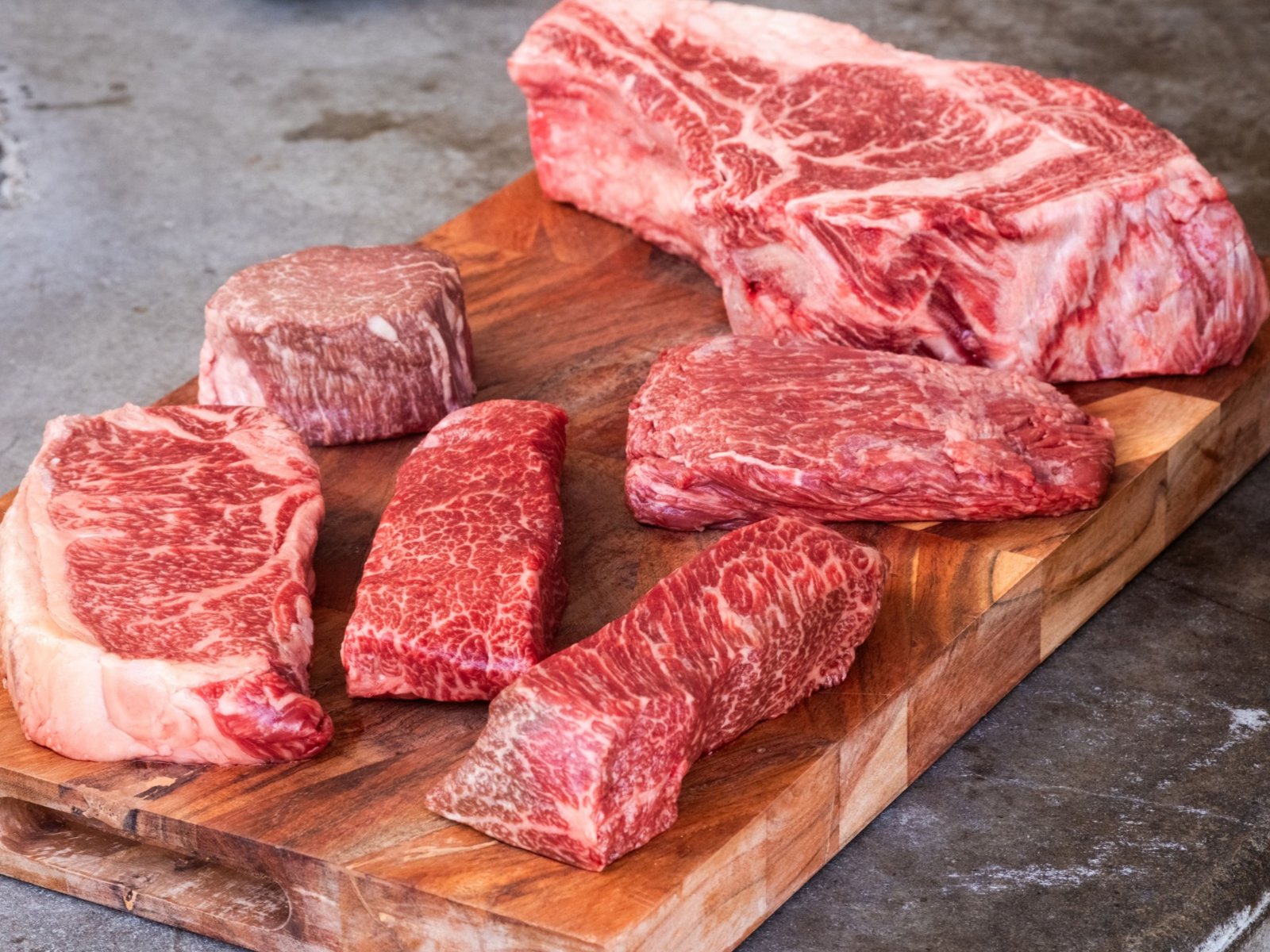
Cooking Wagyu beef for beginners starts with understanding what makes this meat special. Wagyu is a premium beef known for its exceptional marbling, the fine lines of fat running through the muscle. This intramuscular fat gives wagyu its signature rich, buttery flavor and tender texture.
At Prime Wagyu Farm, we raise 100% Full-Blood Wagyu cattle with DNA verification and registration through the American Wagyu Association. Our cattle are raised without hormones, steroids, or unnecessary antibiotics on natural pastures.
The difference between Wagyu and regular beef comes down to fat distribution. Standard beef tends to have fat concentrated on the outside (the fat cap), while Wagyu distributes fat throughout the muscle itself. When you cook Wagyu, this intramuscular fat renders and bastes the meat from within, creating tenderness and depth of flavor.
Marbling, Intramuscular Fat, and Why It Matters
Marbling is the white flecking of fat throughout the meat. In Wagyu beef, this marbling is extensive and fine, the more present, the more flavorful and tender your steak.
Intramuscular fat melts at a lower temperature than muscle fiber, softening and adding moisture as the steak cooks. The result is meat that stays juicy even if you cook it slightly past your target temperature, a forgiving quality ideal for home cooks.
This fat also carries flavor compounds, creating a rich, umami-forward taste that simple beef cannot match.
Japanese, Australian, and American Wagyu
Wagyu beef comes from various sources, including the United States.
American Wagyu, like what Prime Wagyu Farm produces, is 100% Full-Blood Wagyu raised in the United States. Our cattle are raised on natural pastures with a proprietary grain finish, creating beef with exceptional marbling and a refined taste.
For beginners, Wagyu beef will deliver superior results compared to standard beef. The cooking techniques remain the same regardless of origin.
Choosing Your Cut and Steak Thickness
Your choice of cut affects both cooking time and final flavor. The best cuts for beginners are those with good marbling and forgiving cooking windows.
Ribeye steaks are an excellent starting point, with a natural "eye" of intramuscular fat that keeps the meat moist. Prime Wagyu Farm's Wagyu Ribeye is prized for its signature marbling and umami depth.

Flat Iron Steaks are a hidden gem. Cut from the shoulder, the Flat Iron is tender like a filet but marbled like a ribeye.
Chuck Eye Steaks deliver remarkable tenderness and rich flavor. Sometimes called the "butcher's ribeye," the Chuck Eye is perfect for learning because it's forgiving and full of flavor.
Thickness matters more than you might think. Thicker steaks (1.5 to 2 inches) are more forgiving because the exterior can develop a crust while the interior reaches your target temperature.
For beginners, aim for steaks between 1 and 1.5 inches thick. This gives you enough time to build a crust and develop flavor without rushing the cooking process.
Cut |
Thickness |
Best For |
Flavor Profile |
|---|---|---|---|
Ribeye |
1-2 inches |
All skill levels |
Rich, buttery, intense |
Flat Iron |
0.75-1.5 inches |
Beginners |
Tender, balanced |
Chuck Eye |
1-1.5 inches |
Budget-conscious |
Deep, satisfying |
How to Season Wagyu Steak: Keep It Simple
The best seasoning for Wagyu beef is the simplest: salt and pepper. Wagyu's exceptional marbling and rich flavor don't need masking, complex seasonings obscure the meat's natural taste, while salt and pepper enhance without overwhelming.
Kosher salt is ideal because the larger crystals dissolve slowly, giving you better control.
Freshly ground black pepper adds a subtle bite that complements Wagyu's richness. Grind it fresh just before cooking, pre-ground pepper loses its aromatics.
Some cooks brush on high-heat oil (like beef tallow) before seasoning to help the salt and pepper adhere and promote even browning, but this step is optional, the rendered fat in wagyu provides plenty of richness on its own.
Avoid garlic powder, onion powder, or marinades, these compete with wagyu's natural complexity rather than enhance it. Save the fancy seasonings for standard beef.
How to Cook Wagyu Steak: Pan-Searing and Grilling
Two methods dominate for cooking Wagyu beef for beginners: pan-searing and grilling. Both deliver excellent results when executed properly.
Pan-Searing Your Wagyu
Pan-searing is the most reliable method for beginners, giving you direct control over heat and timing.
Start with a cast-iron skillet. Cast iron heats evenly and retains heat exceptionally well. Heat it over medium-high for 3 to 5 minutes until water droplets dance across the surface before evaporating.
Pat your steak dry. Moisture prevents browning and creates steam instead of a crust, this step is non-negotiable.
Place the steak in the hot skillet. Don't move it, let it sit undisturbed for 3 to 4 minutes to develop a crust, where the flavor happens.
Flip once. Turn the steak over and cook for another 3 to 4 minutes on the second side. For a 1.5-inch steak, this timing gets you to medium-rare.
Remove from heat when the internal temperature reaches your target. An instant-read thermometer is the single most reliable way to avoid overcooking.
Grilling Your Wagyu
Grilling works beautifully for Wagyu, but requires more attention than pan-searing.
Preheat your grill to medium-high heat. Gas grills should reach around 400-450°F. For charcoal, create a hot zone by piling coals on one side, leaving the other side cooler.
Oil your grill grates. Coat them with a paper towel dipped in high-heat oil to prevent sticking and help develop a crust.
Place the steak directly over the heat. Cook 3 to 4 minutes without moving it to build that flavorful crust.
Flip and cook the second side. Another 3 to 4 minutes gets a 1.5-inch steak to medium-rare.
Grill carefully over direct heat. Wagyu's high fat content means flare-ups are possible. Watch for flames and move the steak to a cooler zone if needed. The goal is a crust, not char.
Finish with a cooler zone if needed. If your steak browns too quickly but isn't cooked through, move it to the cooler side of the grill to finish gently.
How Long to Cook Wagyu Steak and Internal Temperature
Cooking time depends on steak thickness, starting temperature, and target doneness. A 1-inch Wagyu steak in a hot cast-iron skillet takes about 6 to 8 minutes total (3 to 4 minutes per side); a 1.5-inch steak takes 8 to 12 minutes; a 2-inch steak takes 12 to 16 minutes. These are estimates, the only reliable method is an instant-read thermometer inserted into the thickest part of the steak, parallel to the surface, without touching bone or fat.
Remove the steak from heat 5°F before your target temperature, carryover cooking finishes it as it rests. For medium-rare, remove at 130°F; medium at 135°F; medium-well at 145°F. Wagyu's marbling makes it forgiving: even slightly past medium-rare, the intramuscular fat keeps it juicy and tender.
Wagyu Steak Temperature and Doneness Levels
Understanding doneness helps you hit your target consistently.
Rare (120-125°F): Cold red center, warm outside. The marbling adds richness standard rare beef lacks, but many find it too raw.
Medium-rare (130-135°F): Warm red center, pink throughout. This is the sweet spot, tender, juicy, and the fat has rendered enough to enhance flavor without becoming greasy. Most Wagyu enthusiasts prefer it.
Medium (135-145°F): Mostly pink with some gray. Still tender and juicy, and Wagyu remains forgiving at this temperature.
Medium-well (145-160°F): Mostly gray with hints of pink. Still tender thanks to the marbling, but you lose some of the juiciness that makes Wagyu special.
Well-done (160°F+): No pink. Even with superior marbling, well-done removes much of the tenderness and richness that makes this beef worth buying.
For cooking Wagyu beef for beginners, aim for medium-rare. It's the easiest target to hit and delivers the best flavor and texture.
Common Mistakes to Avoid When Cooking Wagyu
Learning from others' mistakes saves you money and disappointment.
Cooking from a cold start. A cold steak straight from the refrigerator cooks unevenly, the outside cooks too fast while the inside stays cold.
Using low or medium heat. Wagyu needs high heat to develop a crust; low heat makes the steak release moisture and steam rather than brown.
Moving the steak too often. Every flip interrupts crust development. Let it sit undisturbed for 3 to 4 minutes per side.
Skipping the thermometer. Guessing doneness by touch or appearance leads to overcooking. An instant-read thermometer removes all guesswork, use it every time.
Cooking a thin steak. Steaks under 1 inch thick cook so quickly the exterior burns before the interior reaches your target temperature. Stick to 1 to 1.5 inches minimum, especially when learning.
Not letting the steak rest. This is the most common mistake.
Using oil with a low smoke point. Olive oil and butter burn at high heat. Use beef tallow, or if you must, avocado, grapeseed, or vegetable oil for pan-searing, and save butter for finishing.
Resting and Serving Your Wagyu Steak
Resting is as important as cooking. It's the difference between a juicy steak and a dry one.
Rest your steak for 5 to 10 minutes after removing it from heat, tented loosely with foil.
Cut against the grain if you're slicing the steak. Cut perpendicular to the muscle fibers to shorten them and make each bite more tender.
Serve on a warm plate. Cold plates cool the steak quickly and diminish flavor. Warm your plates in a 200°F oven while the steak cooks.
Add finishing touches sparingly. A pinch of fleur de sel and a crack of fresh pepper enhance the meat without overwhelming it.
Pair with simple sides. Roasted potatoes, grilled asparagus, or a green salad complement Wagyu without competing. Save rich sauces for standard beef.
The rendered fat left in your pan is liquid gold. Refrigerate it and use it for cooking vegetables or finishing dishes, one of the hidden luxuries of cooking Wagyu.
Cooking wagyu beef for beginners doesn't require professional skills, just solid technique and patience. Start with a thick cut like our Wagyu Ribeye or Flat Iron Steak, season simply with salt and pepper, sear in a hot cast-iron skillet, and use a thermometer to hit medium-rare. Your first wagyu steak at home will taste like a steakhouse experience, because now you know how to cook it properly. SHOP NOW

Frequently Asked Questions
What is the best way to cook Wagyu beef?
The best way to cook Wagyu beef is to keep it simple: pan-sear or grill over medium-high heat for 3-4 minutes per side, depending on thickness. Wagyu's high marbling content renders fat that bastes the meat as it cooks, so you need minimal added oil or butter. Season with just kosher salt and black pepper before cooking. The key is not overcooking—Wagyu is best served medium-rare to medium to preserve its buttery texture and rich flavor.
How do you know when your Wagyu steak is done cooking?
Use an instant-read meat thermometer to check internal temperature. For medium-rare, aim for 130-135°F; for medium, 135-145°F. Insert the thermometer into the thickest part of the steak without touching bone or fat. Remove the steak from heat 5°F below your target temperature, as carryover cooking will raise it another 5 degrees while it rests. This precision prevents overcooking and ensures a tender, juicy result.
Should Wagyu steak be cooked differently from regular steak?
Yes. Wagyu's intramuscular fat renders quickly, keeping the meat moist. Use medium-high heat, and you need less added fat—the Wagyu itself provides plenty. Season minimally before cooking to let the natural flavor shine. The rendered fat creates its own basting, so skip heavy sauces and let the meat speak for itself.
How long should Wagyu steak rest after cooking?
Rest your Wagyu steak for 5-10 minutes after removing it from heat. Tenting loosely with foil keeps it warm while the juices redistribute throughout the meat. Skipping this step causes juices to run onto the plate instead of staying in the steak, resulting in a drier bite. For thicker cuts (over 1.5 inches), aim for the full 10 minutes. This resting period is crucial to preserving the tenderness and juiciness that make Wagyu special.


