

Table of Contents
- Is Wagyu Beef Worth the Price? What You're Actually Paying For
- Why Is Wagyu Beef So Expensive?
- Wagyu vs. Regular Beef: The Real Differences
- Wagyu Beef Grades: How to Read Labels and Verify Authenticity
- Best Wagyu Cuts for the Money: A Cost-Per-Serving Breakdown
- Who Should Buy Wagyu (And Who Should Skip It)
- Cooking Wagyu at Home Without Wasting Your Money
- The Verdict: When Wagyu Beef Is Worth the Price
- Frequently Asked Questions
Last Updated: October 14, 2026
Is Wagyu Beef Worth the Price? What You're Actually Paying For
Wagyu beef is a premium Japanese cattle breed prized for intense intramuscular marbling that produces a buttery, rich flavor and melt-in-your-mouth texture.
The short answer: yes, if you're treating it as a special occasion experience rather than a weekly grocery staple.
Here's the part most guides skip: the word "Wagyu" on a label tells you almost nothing about what's in the package.
Why Is Wagyu Beef So Expensive?
Wagyu beef is expensive because supply is small, the raising process is slow, and genetics are tightly controlled. Every pound carries costs conventional beef never touches.
The Cost Drivers Behind Every Pound
Four things push the price up:
- Time. Cattle are raised for years, not months, to build the marbling that defines the breed.
- Genetics. Full-blood Wagyu bloodlines are limited, and verified lineage costs money to maintain and document.
- Feed. Slow, careful finishing on a controlled diet is expensive and takes patience.
- Yield. Heavy marbling means more trim, more loss during cooking, and smaller usable portions per animal.
That last point catches people off guard. A highly marbled steak renders a surprising amount of fat, so a 12-ounce cut doesn't eat like 12 ounces of conventional beef. You're paying for richness, not volume.
Wagyu vs. Regular Beef: The Real Differences
The core difference is intramuscular fat, the marbling woven through the muscle rather than sitting in a layer around it. Conventional beef has some. Well-raised Wagyu has dramatically more.
That fat melts at a lower temperature, basting the meat from the inside as it cooks.
Regular beef is leaner, firmer, and more forgiving, and it tastes like beef, exactly what many people want on a random Wednesday. Wagyu is a different sensory experience.
Wagyu Beef Grades: How to Read Labels and Verify Authenticity
Wagyu beef grades measure marbling, color, and yield, and they're the best tool for verifying you're getting what you paid for. Reading them correctly separates a genuine premium cut from marketing.
Japanese Wagyu uses a yield grade (A, B, or C) plus a quality score (1 through 5), producing labels like A5, the highest, meaning top yield and maximum marbling.
Japanese vs. American Wagyu: What the Grade Tells You
Japanese Wagyu comes from pure Japanese cattle breeds and is graded on the strict system above. American Wagyu usually means a crossbreed, often Wagyu bred with Angus, graded on the USDA scale.
Both can be excellent, but they are not the same product and should not carry the same price.
Ask three questions before you buy:
- Is the breed full-blood or crossbred?
- What grade is stated, and on which system?
- Is the lineage documented and verifiable?
If a seller can't answer all three, that tells you something.
Best Wagyu Cuts for the Money: A Cost-Per-Serving Breakdown
The best Wagyu cuts for the money match your cooking skill and the occasion, not the highest grade.
Cost Per Serving, Not Cost Per Pound
Headline prices mislead because Wagyu portions run smaller than conventional steak portions. Most people are satisfied with 4 to 6 ounces rather than a full 10- to 12-ounce steak, because the marbling makes it far richer. That reshapes the math.
Here's how our cuts compare when you price them by the plate instead of the pound:
| Cut | Price Per Pound | Servings Per Pound | Approx. Cost Per Serving | Best For | Cooking Difficulty |
|---|---|---|---|---|---|
| Wagyu Ground Beef | $15.00 | ~3 | ~$5.00 | First-timers, burgers, sauces | Easy |
| Wagyu Flat Iron Steak | $30.00 | ~3 | ~$10.00 | Best value per serving, weeknight upgrade | Easy |
| Wagyu New York Strip Steak | $61.00 | ~3 | ~$20.00 | Purists who want beef-forward flavor | Moderate |
| Wagyu Ribeye Steak | $69.00 | ~3 | ~$23.00 | Special occasions, maximum richness | Moderate |
The flat iron lands around $10 a plate, roughly what you'd pay for a mid-tier steak dinner at a casual restaurant, except you're eating full-blood Wagyu at your own table.

Why the Flat Iron Wins on Value
The flat iron is the quiet standout: tender like a filet but a fraction of a ribeye's cost, with marbling even enough that a simple sear produces a consistent result across the whole steak.
Ground beef is the other entry point: forgiving, versatile in burgers, tacos, and sauces, and a way to taste the flavor difference without committing to a premium steak. If you're skeptical about the price question, start here.
Matching Cuts to Occasions and Cooking Skill
New to Wagyu? Start with the ground beef or flat iron, both are forgiving and let you taste what the marbling does before committing to a top-tier steak.
For a dinner party where you want the table to go quiet, the ribeye is the move, its signature eye of intramuscular fat delivers the most indulgent texture and deepest umami of anything we sell.
Small Portions vs. Full Steaks: Which Is Better Value?
Should you buy one large steak or several smaller ones? It depends on the crowd. For two people, a 10-ounce ribeye split into two 5-ounce portions delivers the full experience at roughly $23 per person. For four, two 5-ounce flat irons land closer to $10 per person and leave room for sides. Feeding skeptical eaters? Smaller portions of a forgiving cut are the smarter spend, you get the Wagyu experience without betting the whole meal on it.
Who Should Buy Wagyu (And Who Should Skip It)
Buy Wagyu if you're marking an occasion, feeding people who appreciate food, or giving a gift that lands.
The honest version: Wagyu is a treat, not a staple. It shines at celebrations, dinner parties, and holidays, and it's wasted on a rushed weeknight when nobody's paying attention to the plate.
It's also not for everyone's palate. Some find the richness overwhelming after a few bites.
Cooking Wagyu at Home Without Wasting Your Money
Cooking Wagyu at home is simpler than most people fear, but it punishes two mistakes: overcooking and overhandling. The gap between buying Wagyu and enjoying it is almost always a cooking gap, so let's close it with specifics.
Start With the Right Pan and Heat
Wagyu's marbling renders at a lower temperature than conventional beef fat, so you don't need, and shouldn't use, the screaming-hot cast iron you'd deploy for a leaner steak.
If you're using a grill, set up a two-zone fire: hot side for the sear, cooler side to finish. This gives you control if the exterior browns faster than the interior cooks.
Temperature and Doneness
This is where money is won or lost. Wagyu is best at medium-rare, roughly 130°F to 135°F at the center. Pull it 5 degrees below target and let carryover cooking finish during the rest.
First-time buyers often cook Wagyu like a grocery-store ribeye, longer, hotter, to a higher internal temperature. That's the single most expensive mistake in this category. Use an instant-read thermometer; it costs less than the steak.
Seasoning: Less Is More
Salt is usually enough: a light dusting of coarse salt just before the sear, or a dry brine 30 to 45 minutes ahead if you have time. Heavy marinades, rubs, and sauces bury the flavor you paid for. For a finishing touch, a knob of butter or splash of soy sauce complements the umami without masking it.
Rest, Slice, and Portion
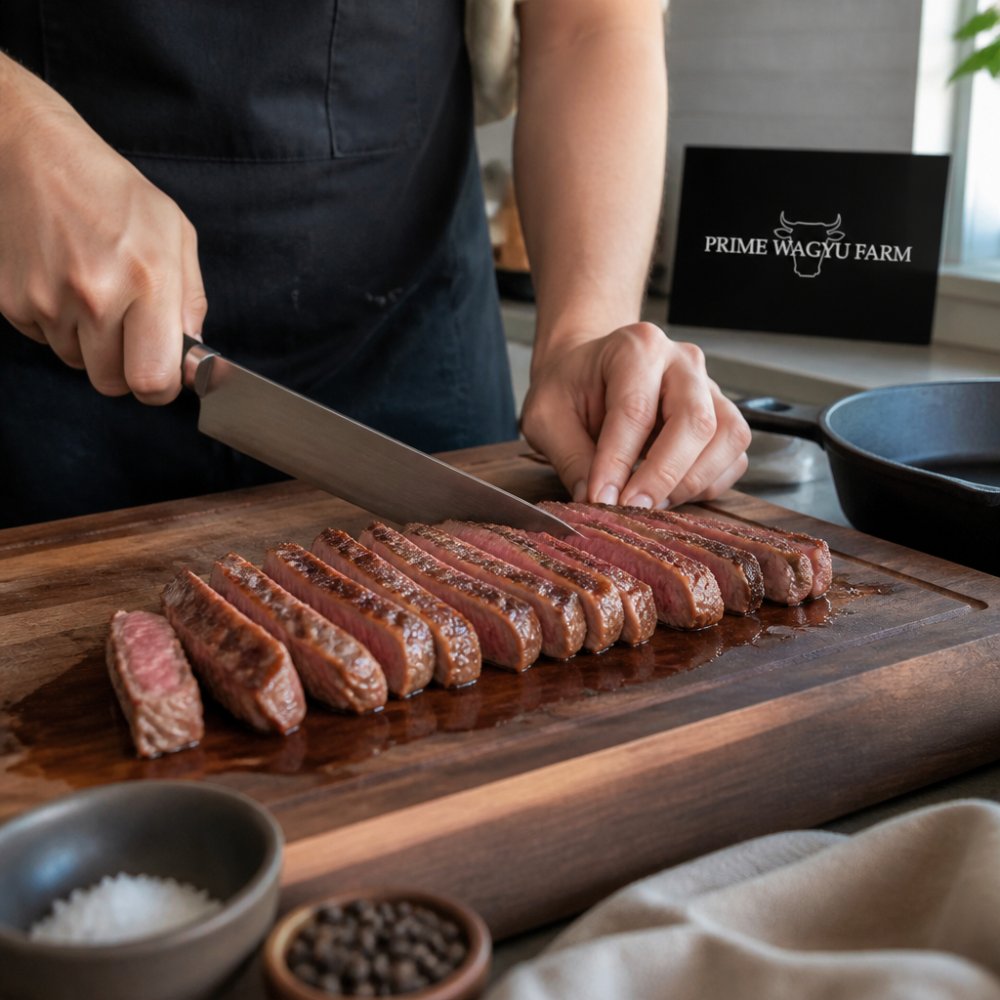
Rest the steak 5 to 10 minutes so juices redistribute, then slice against the grain, especially important for flat iron, which has a visible grain direction. For a 5-ounce portion, slice into quarter-inch strips; this spreads the richness across more bites and makes a small portion feel like a full plate.

The Ground Beef Exception
Ground Wagyu behaves differently. Because the fat is mixed throughout, it renders quickly and can make burgers greasy if cooked like conventional ground beef. Form patties loosely, cook over medium rather than high heat, and don't press them. The result is a distinctly richer, more buttery burger than standard ground chuck.
If You're Nervous About Ruining an Expensive Cut
That's a reasonable fear, and the fix is sequencing. Start with a forgiving cut, ground beef or flat iron, and a simple method. Get one good result, then build. The flat iron is hard to overcook badly if you pull it at the right temperature, making it the ideal training cut before you graduate to a ribeye.
The Verdict: When Wagyu Beef Is Worth the Price
Wagyu beef is worth the price when you know what you're buying, why, and how to cook it.
The value question comes down to three things: verified genetics, a clear grade, and a cut that fits the occasion.
The real risk with Wagyu isn't the price. Start with a forgiving cut like our flat iron or ground beef, cook it simply, and taste the difference for yourself. Shop now and make your next occasion one worth remembering.
Frequently Asked Questions
Is Wagyu beef worth the price compared to regular steak?
It depends on what you want from the meal. Wagyu beef price reflects genetics, feed, time, and the intense marbling that produces its buttery texture and rich flavor. If you're comparing a standard grocery store ribeye to a full-blood Wagyu ribeye, you're paying for a different eating experience: smaller portions satisfy because the fat content carries more flavor. For a special occasion or a memorable dinner, many buyers find the splurge justified. For a weeknight burger, regular beef works fine.
Why is Wagyu beef so expensive?
Several factors stack up. Full-blood Wagyu cattle are genetically unique and often DNA-verified, which limits supply. They're raised longer than conventional cattle, eat more costly feed, and produce less meat per animal. Strict grading standards, especially for Japanese A5, mean only a fraction of carcasses qualify. All of this adds up before the beef ever reaches a retail counter or online store.
What are the best Wagyu cuts for the money?
For a balance of price and experience, the flat iron delivers filet-like tenderness at a lower cost per pound. Ground Wagyu is the most affordable entry point and shines in burgers or sauces. The New York strip offers a firmer, beef-forward bite for purists, while the ribeye is the richest and most iconic. If you're new to Wagyu, start with a smaller cut like flat iron or ground beef to learn the cooking method before investing in a premium ribeye.
How do I know if Wagyu beef is authentic?
Look for DNA verification and registration with a recognized breed association. Reputable sellers provide documentation showing full-blood lineage, not just a crossbred percentage. If a label only says 'Wagyu-style' or doesn't specify bloodline, treat it with caution. Authentic full-blood Wagyu has distinct marbling that looks like fine lace throughout the muscle, not just a fat cap.


